Blog / Electric Vehicles

Blog

All Electric Vehicles Nissan Rogue Maintenance Bentonville Nissan Dealer Frontier Comparison Travel Tips Altima Bentonville Nissan Service Leaf McLarty Daniel Nissan Service Pathfinder Titan Armada Awards Certified Pre-Owned Kicks Versa Ariya History Murano New Technology Tires Z Series
hero14

A Deep Dive into the All-Electric Nissan Leaf

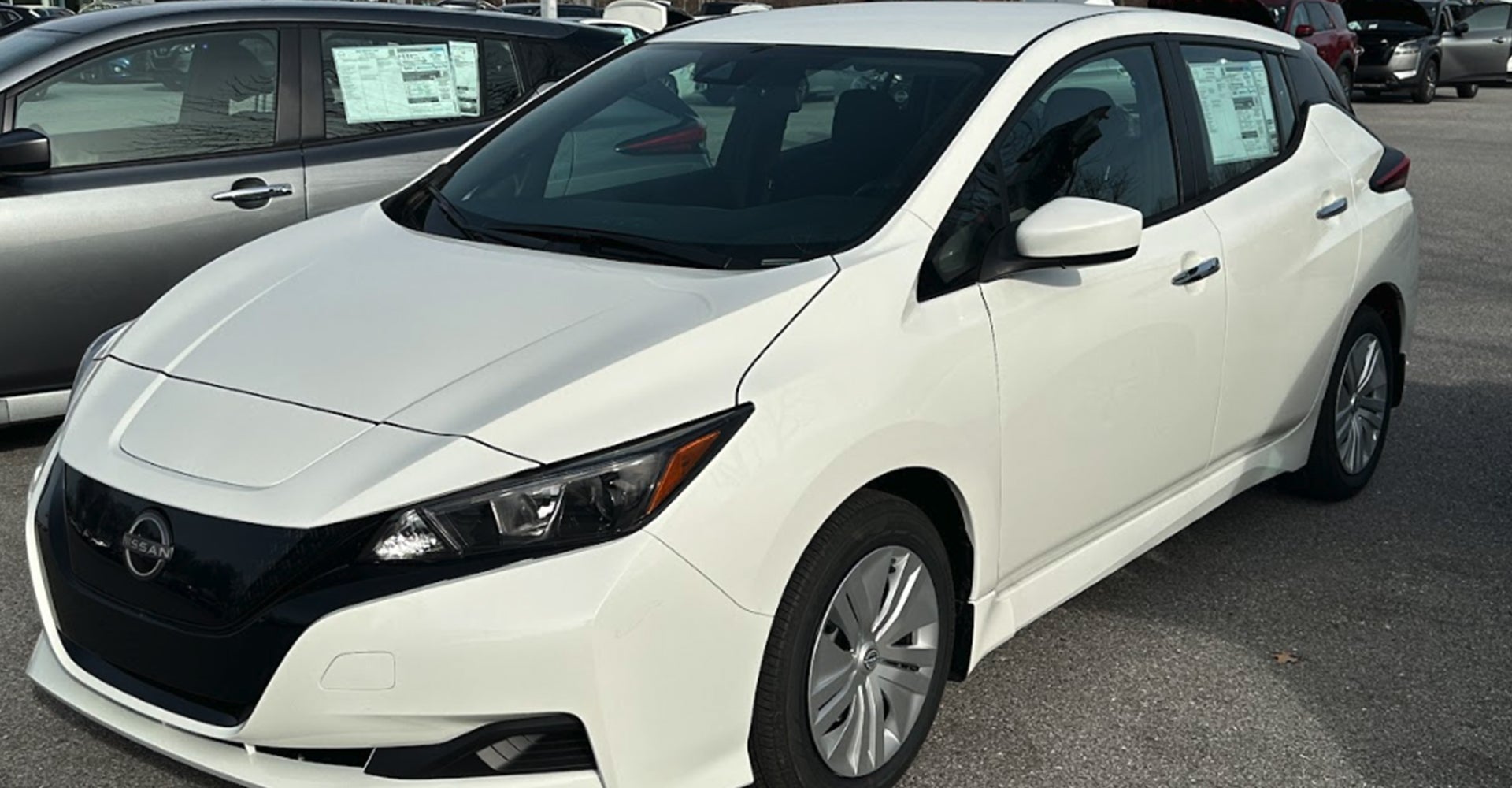
A Deep Dive into the All-Electric Nissan Leaf From Trailblazer to Tech Titan: The Story of the Nissan Leaf When you think about the electric vehicle (EV) revolution, Tesla might get many of today's headlines, but Nissan was out there making bold moves before EVs became as well-known as they are today. The Nissan Leaf didn't just roll onto the scene. It helped define what an affordable, everyday electric car could be. Let's take a closer look at how the Leaf went from a groundbreaking experiment to an everyday, solid choice. Explore the 2025 Nissan Leaf The Birth of a Revolution: 2010 Launch In 2010, when EVs were still considered a little niche and risky, Nissan dropped the Leaf: the world's first mass-market all-electric car. It wasn't a science project or a luxury toy; it was an actual, practical hatchback that people could afford. With about 73 miles of range on the original model, it gave early adopters a glimpse of a cleaner future, one grocery trip or daily commute at a time. It was hard for this model to break out of its niche, though, and the Leaf would have to come to grips with a common EV challenge: battery range. 2010s: Growth, Upgrades, and Going the Distance As battery tech got better, so did the Leaf. Throughout the 2010s, Nissan kept pushing for improvements such as longer ranges, faster charging times, and more innovative tech such as regenerative braking. By 2018, the second-generation Leaf rolled out, bringing a sharper look, more range (up to 150 miles standard, 226 miles with the Leaf Plus), and even more value. Suddenly, the Leaf wasn't just for eco-warriors — it was for everyone, just in time for electric cars to break into the mainstream. Learn more about the 2025 Nissan Leaf Innovation Under the Hood: What Makes the Nissan Leaf Special It's easy to think of EVs as just "cars with batteries," but the Leaf has always had a little more magic going on. Its e-Pedal system lets you speed up, slow down, and stop, all with one pedal. The Leaf's low center of gravity gives it a surprisingly nimble feel, perfect for city driving or zipping around during your weekend adventures in Fayetteville, Springdale, and other areas of Northwest Arkansas. It's an EV that feels intuitive, not intimidating. Learn More about Nissan Safety Shield 360 Why the Leaf Matters Today, with the 2025 Leaf, Nissan continues to offer one of the most accessible electric cars on the market. Pricing is a significant barrier for those looking to move to electric, but the Leaf is a budget-friendly option that still provides consumers with top-tier features, especially when it comes to safety. It includes access to Nissan Safety Shield 360, which includes front collision warning with pedestrian detection and automatic emergency braking, rear cross-traffic warning and other advanced safety features. In other words, the Leaf is perfect for those in a city environment where pedestrian safety is paramount. For the tech-savvy, NissanConnect EV and Services App lets you lock your car, honk your horn, control the climate, and more from your smartphone or smart watch. This feature makes it easy to find your car after a long day at Reynolds Razorback Stadium or Bud Walton Arena (or even a packed Walmart lot). If you're curious what the electric lifestyle could look like for you, swing by McLarty Daniel Nissan in Bentonville, AR. We'll plug you into everything you need to know, and maybe even send you home in something electric.
leaf

What's The Difference Between Level 1, Level 2 and Dc Fast Chargers for Electric Vehicles

You may utilize home charging stations to keep your electric car juiced up and ready to go to work. However, if you’re new to electric-vehicle life, it’s easy to get confused while determining which type of electric vehicle charging equipment to place in your garage. Understanding the contrasts between Level 1 and Level 2 stations may help you in determining the charger you require to keep the power flowing in your car. Because a Level 1 charger can be connected to a 120-volt outlet, it is the simplest way to charge at home. On the other hand, it may take an extended period of time to recharge your battery. In general, plug-ins could expect 4.5 miles of driving for every hour of charging, however, this varies depending on the battery capacity. A pure-electric battery can run for up to 20 hours, whereas a hybrid battery can run for as little as seven hours. If you repeatedly deplete your battery to nothing and want immediate power, Level 1 will not suffice. If you only travel short distances and have the patience to let it charge slowly overnight, this may be the choice for you. Simply ensure that you have a backup plan in place in the event that you require something more powerful immediately. A Level 2 charging station is a substantial investment, but it will pay off in the long run. These 240-volt chargers, capable of delivering up to 32 Amps of energy, require professional installation. Depending on the brand and kind of car you drive, you may fill up around five times faster than with a Level 1 charger. There are a lot of reasons to upgrade from your Level 1 charging station. A Level 2 charger is the ideal option for people who often drive long distances, do not have access to a high-powered charger near their home or place of employment, or just don’t want to wait hours to get their car back on the road. The 240-volt portable charger is an excellent solution if your garage lacks the room for a Level 2 Wallbox. Even though this charger is smaller and lighter than a Level 1 station, it gives three times the power! Even if you do not have an outlet with a suitable voltage, you may charge your car slowly and carry your charger with you if necessary. With this knowledge, you can make the most energy-efficient choices for your car. With the proper domestic EV charging choices, you can get the most out of your plug-in vehicle. Driving a zero-emission vehicle is significantly easier and more enjoyable if you have all of the necessary equipment to keep your battery charged right in your garage.

ariya

What's the Difference Between Nissan ARIYA & LEAF?

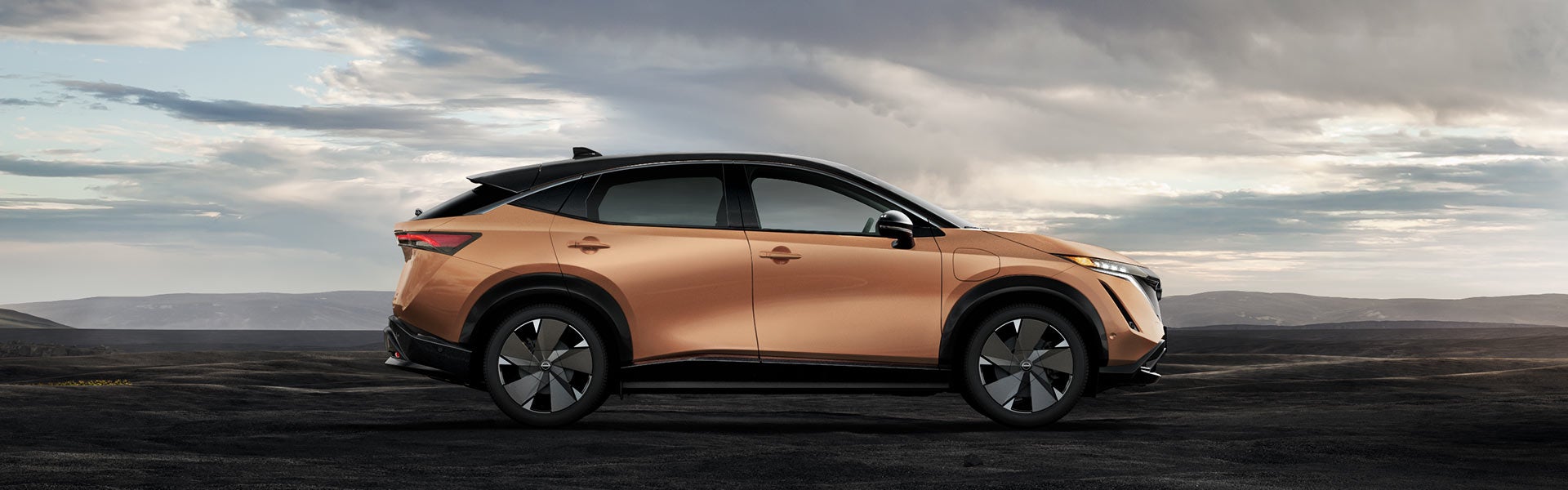
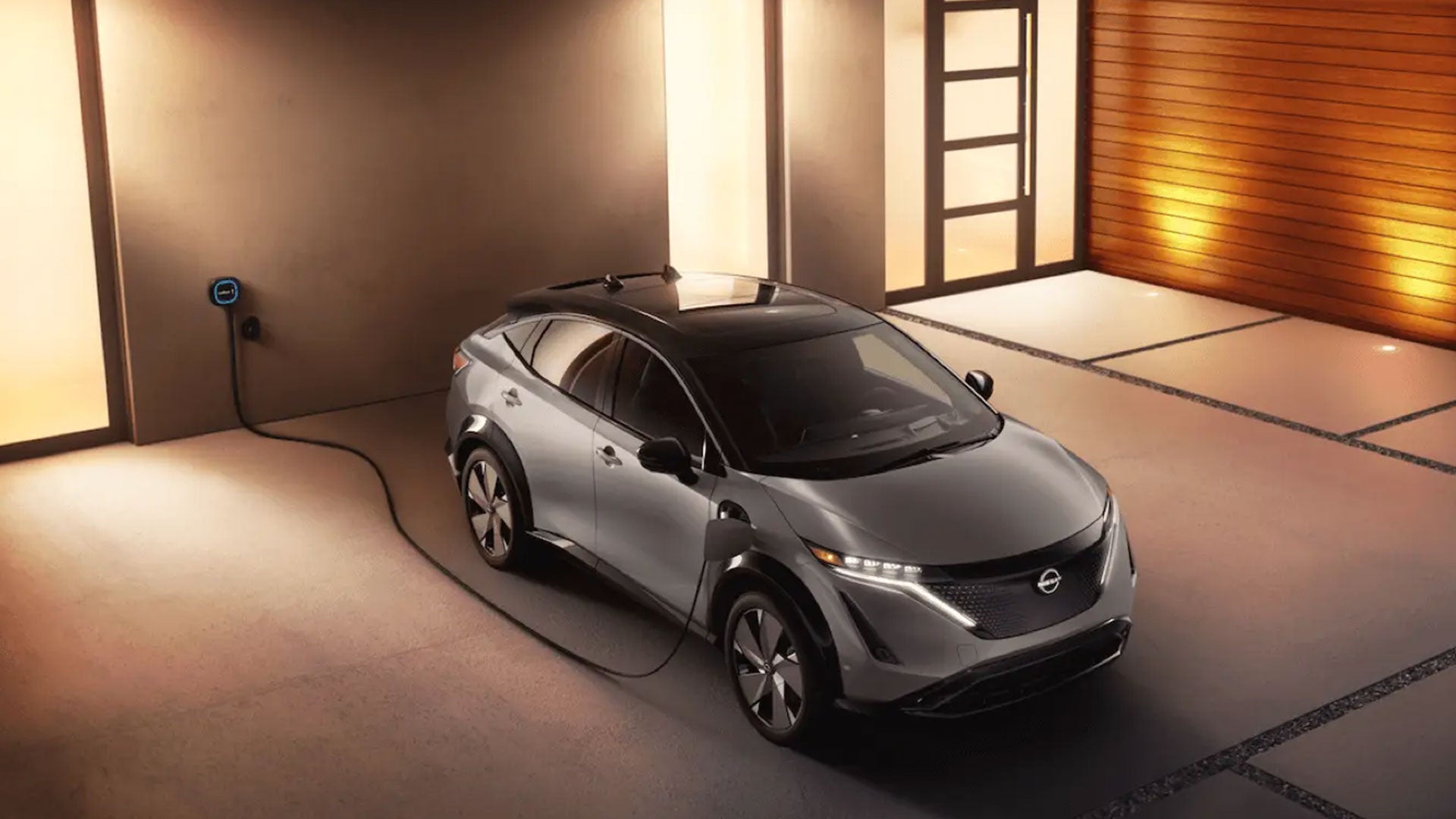
Nissan has long been at the forefront of technological innovations. That said, Nissan has once again demonstrated why it is the people's champion by launching its new electric vehicles. The new Nissan EVs are genuinely remarkable, providing us with reasonably priced EVs that can compete with the more expensive options like Tesla. The Nissan ARIYA and Nissan LEAF are two vehicles that the average person can't go wrong with. The Nissan LEAF is a compact sedan, while the all-new Nissan ARIYA is a compact SUV. When it comes to overall features, the ARIYA comes out on top, but it doesn't mean the LEAF isn't a nice car. VIEW OUR EV INVENTORY TODAY Engine The ARIYA sports a larger engine or electric motor with 215 horsepower under the hood. This offers quick acceleration, and the EV's quiet nature makes it a perfect city commuter. The enormous battery pack allows the automobile to go from 0 to 60 mph in about five seconds, which is fantastic. The ARIYA is equally at home on a wide stretch of road as it is in a tight parking area. The LEAF has a smaller electric motor that produces 147 horsepower. This is a low figure, yet it is plenty given the car's size. It accelerates well in city traffic, although it may struggle on highways. If you're going on a lengthy trip, its limited driving range can be a concern. Range The ARIYA has a driving range of up to 300 miles, while the LEAF offers 226 miles on a single charge. ARIYA's larger battery pack gives it a far more adaptable alternative for anyone seeking a new vehicle. The LEAF is a great car; it's simply that the ARIYA provides a lot more for a lot less. Stop By McLarty Daniel Nissan serving the areas of Centerton, Bella Vista, Bentonville, Eureka Springs, Fayetteville, Pea Ridge, Springdale, and Rogers, Arkansas, and let our knowledgeable sales professionals help you decide which Nissan EV is right for you.

Contact Us

Fill out this form below and we'll contact you shortly
*Required Fields