

What are Nissan Zero Gravity Seats?
Are you looking forward to your upcoming summer getaway but are dreading the car ride? Oftentimes long car rides result in muscle fatigue and even promote spinal bending, which can result in more pressure on your lower back. Nissan engineers wanted to put an end to everyday uncomfortable car seats, so they developed something called Zero Gravity Seats, which have been in select vehicles since 2013.
Many people still to this day are wondering what exactly are Zero Gravity Seats? McLarty Daniel Nissan is here to explain to you what exactly the difference is between Nissan Zero Gravity Seats and your average car seat.
What’s in the Name?
Now, sadly gravity still applies when you’re in the seats. However, Nissan engineers actually named them this due to the human spine position when it is at zero gravity. According to Nissan, in space, our bodies assume a relaxed posture that minimizes stress on bones and joints, which ultimately reduces muscle fatigue and improves blood flow resulting in a much more enjoyable car ride.
How Are They Different?
Nissan Zero Gravity Seats are unique in the way that their shape will provide continuous support from your hips all the way up to your shoulders. This means that there are 14 different pressure points within the seats made to support your spine, ultimately allowing you to remain neutral and comfortable whether your commute is long or short. Like mentioned earlier, Nissan originally debuted the Zero Gravity Seats in 2013 on the Nissan Altima but has since then extended it to several other models within its lineup, such as the Maxima, the Kicks, the Rogue, the Murano, the Titian and even the Titan XD.
CHECK OUT OUR AVAILABLE INVENTORY WITH NISSAN ZERO GRAVITY SEATS
If we piqued your interest and you would like to experience the Zero Gravity Seats for yourself in Centerton, Bella Vista, Bentonville, Eureka Springs, Fayetteville, Pea Ridge, Springdale or Rogers, Arkansas, we would like to invite you to swing by McLarty Daniel Nissan today for a test drive. If you have any other questions, please do not hesitate to contact us; we would love to assist.

Unless you’re one of those folks who just likes traveling to see the world roll by, a long-distance road trip can be a dreadfully dull experience, especially if you don’t have much time to stop and see the sights along the way. That’s why we like to have a great, long-form podcast all cued up and ready to roll before we hit the road.
Podcasts — episodic fiction or non-fiction audio stories that can be found on services like Spotify and iTunes, usually for free — have exploded in variety and quality of the past few years, and there are literally thousands to choose from on topics ranging from cooking to relationships, true crime to science-fiction, conspiracy to country music. The variety and depth of the podcast universe can make separating the great ones from the so-so a tough task.
Seen below are three great, long-form podcasts that will help make that long mid-winter road trip fly by. And if you need a vehicle that will get you there and back in style, safety and comfort, stop in today at McLarty Daniel Nissan for a test drive, or check out our full selection of vehicles at our website right now.
SLOW BURN: BIGGIE AND TUPAC: After doing deep dives during season one and two on the Watergate scandal and the impeachment of President Bill Clinton respectively, you might have expected the phenomenal podcast series “Slow Burn” to go after another political scandal. For season three, however, they threw us a curveball, instead choosing to focus on one of the most tragic stories of 1990s music: the murders of hip-hop artists Biggie Smalls and Tupac Shakur, which were the apparent culmination of years of an East Coast/West Coast rivalry that finally led to bloodshed and death in the streets. Host Joel Anderson and his team dive just as deep into the controversy as they did on the stories of Nixon and Clinton, taking both the music industry and the media to task for whipping up a feud that eventually took the lives of two of the most talented artists of their generation. Even if you aren’t a fan of Biggie or Tupac, it’s a fascinating story.
THE DROPOUT: Brilliant, eccentric and relentlessly driven, young entrepreneur and college dropout Elizabeth Holmes seemed like the next Bill Gates or Steve Jobs when she burst onto the scene in the mid-2010s, with her Silicon Valley startup Theranos promising to revolutionize healthcare with a tabletop device called Edison that could test for hundreds of medical conditions in minutes using only a single drop of blood. After forging a partnership with drugstore chain Walgreens, Theranos soon made Holmes the youngest self-made female billionaire in the world as investors flocked to throw money at a technology that looked like The Next Big Thing. Behind the scenes, however, crusading reporters were beginning to uncover the truth: that Theranos was built on a precarious web of lies. Eventually, it all came tumbling down, taking billions of dollars in funds and the hope for a promising new medical breakthrough with it. In this deep and engaging podcast, host Rebecca Jarvis delves into Holmes’ strange backstory, and reveals how and why Holmes was able to con investors, corporations and medical professionals for so long.
BLACKOUT: If reality is getting a little too real for you, why not try out the fictionalized podcast “Blackout”? Starring and produced by Rami Malek, who recently won a 2019 Academy Award for his performance as Queen frontman Freddie Mercury in “Bohemian Rhapsody,” the podcast follows a radio DJ broadcasting from a small town in New Hampshire as the United States falls into chaos following a mysterious, nationwide power blackout. If you’ve ever considered how dependent we are on reliable electricity for everything from stoplights to banking, refrigeration to charging our phones, getting our news to connecting with loved ones, you know how pulse-pounding and anxious “Blackout” eventually gets, and that’s before it turns to the nefarious background of the event that plunges America into darkness. An unsettling reminder of just how fragile civilization might be in a time of crisis, it’s a nerve-racking ride with one of the best actors working today.
The 2010s were a great decade for technological innovation, and that includes innovations that made driving safer, easier, more efficient and more fun. So before we jump into a whole new decade of groundbreaking technologies, we thought we’d take a look back at some of the automotive developments that really came into their own in the 2010s. While not all of these were invented in the 2010s, many of them gained widespread acceptance in the past decade, finding their way into even lower-priced vehicles. And when you’re ready to get behind the wheel of the vehicles of the future that you can drive right now, come see us at McLarty Daniel Nissan, or check our our great selection of quality Nissan vehicles online right now.
High-Definition Digital Gauge Clusters: While having a high-definition screen to display the functions of your vehicle would have seemed like the stuff of science fiction twenty years ago, today it’s actually uncommon to find a new vehicle without one. These days, high-definition automotive displays are quickly supplanting analogue gauges in many vehicles, giving drivers the ability to customize the information they receive from their vehicles and even customize the way the way the virtual gauges look, with some systems having the ability to switch between retro-look or futuristic digital gauges and more.
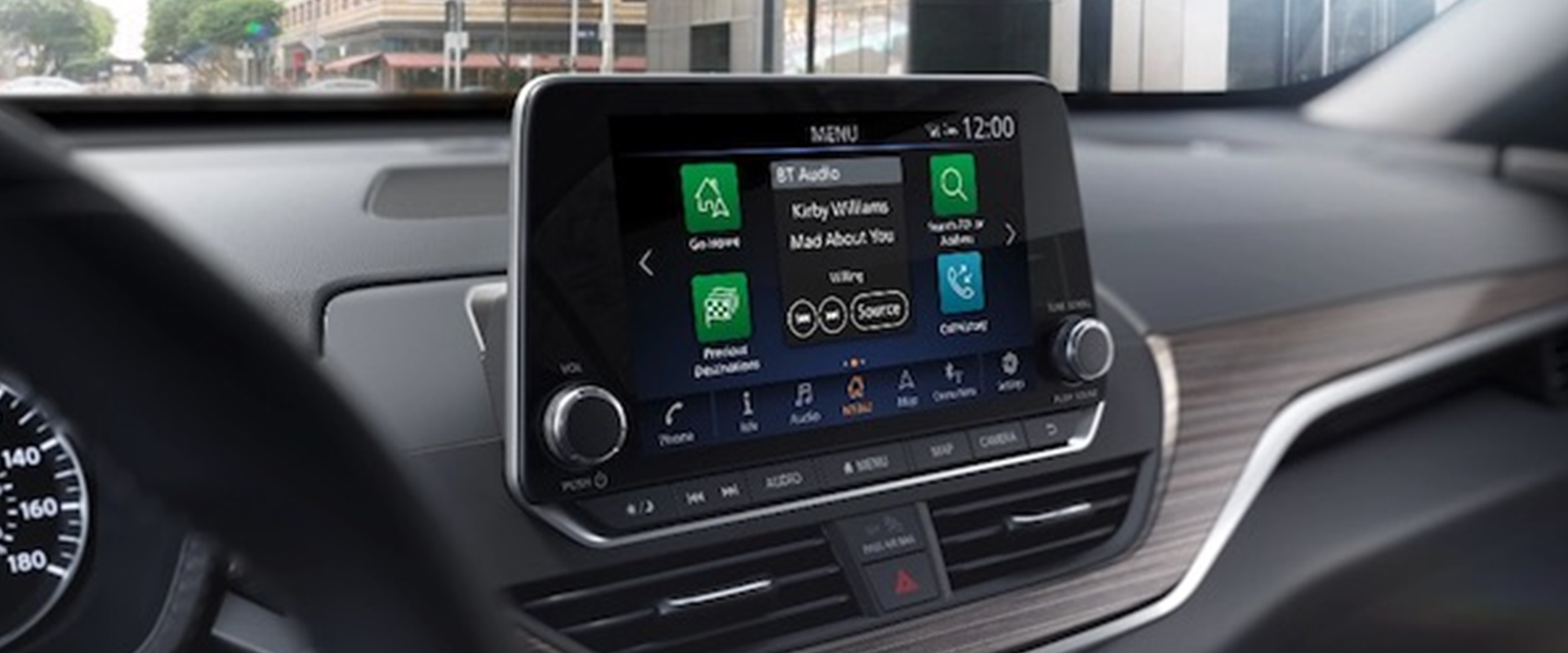
In-Dash High-Definition Touchscreens: Similar to the digital gauge clusters we talked about above, center-dash high-def touchscreens are becoming standard equipment in most new vehicles, giving drivers instant access to helpful functions like turn-by-turn navigation, smartphone integration and hands-free calling, backup cameras, hitch-view cameras that take the anxiety and guesswork out of hitching a trailer, 360-degree birds-eye views of the surrounding area and more. Some touchscreen systems can even make restaurant suggestions for you, or allow you to pay for fuel right from the screen.
Hands-Free Liftgates: While there was a time when opening the rear hatch of your SUV or van while you had your hands full meant precariously juggling your packages while digging in your pocket for your keys, many vehicles today offer the convenience of a hands-free liftgate. On SUVs and vans equipped with the feature, the vehicle automatically detects the keyfob in your pocket as you approach, then opens when you perform a specific gesture, such as waving your foot under a specific spot below the rear bumper. At that, the hatch magically pops and lifts without so much as an “open sesame” or “abracadabra.”
Hybrid and full-electric cars: Finding our way toward a more eco-friendly and sustainable future means that at some point, a large portion of society is going to have to make the change-over from gasoline and diesel vehicles to vehicles powered by sources that pollute less and conserve more. The world took a great leap toward that goal in the 2010s, with the widespread acceptance of hybrid and all-electric vehicles like the Nissan Leaf. With the rollout of better battery technologies, more efficient electric motors, and the construction of widespread fast-charging networks, the 2020s should see another big leap forward for hybrid and electric vehicles.
Overall Fuel Efficiency: The 2010s started with a fuel crunch, which led many manufacturers to take on the engineering and technology hurdles associated with making cars, trucks, vans and SUVs go further on less fuel. From hybrid technologies to modern turbocharging that allows smaller engines to make big power from less fuel, the 2010s saw fuel efficiency skyrocket, even in traditionally fuel-hungry vehicles like full-size trucks and SUVs. Today, it’s rare to find a vehicle that doesn’t manage at least 20 miles per gallon fuel economy, a figure which was pretty much unheard of in larger vehicles only a decade ago.
2020 Altima’s revolutionary VC-Turbo engine named to Wards 10 Best Engines of 2020 | McLarty Daniel Nissan
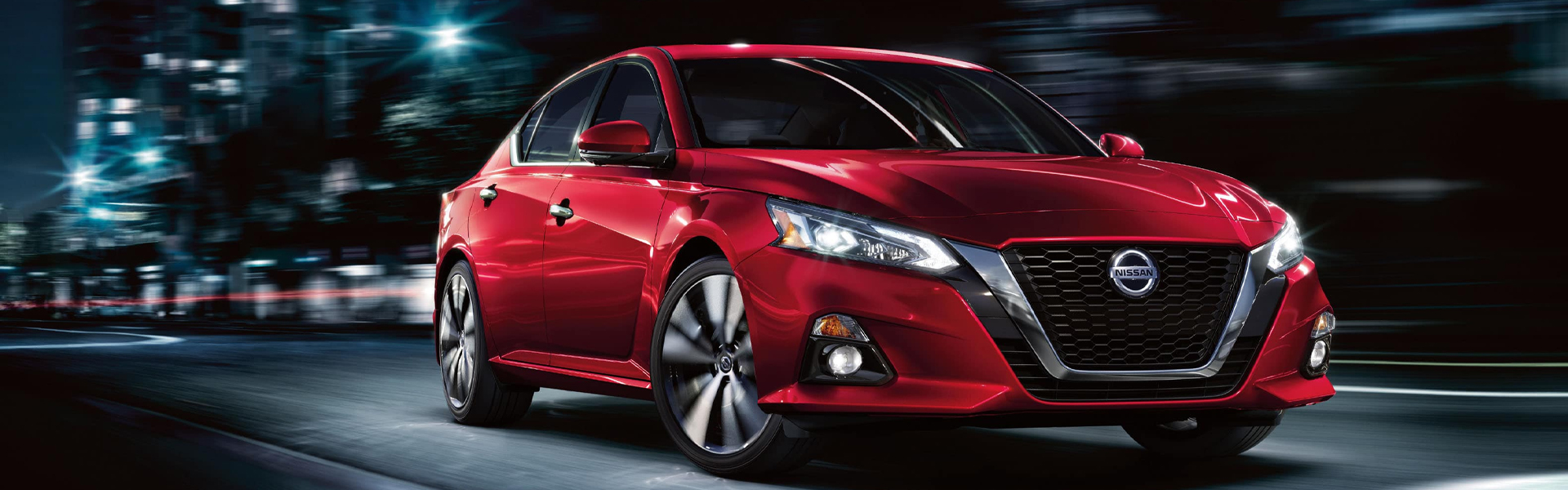
From the classic Nissan Z cars to the ultra-high-performance 2020 Nissan GT-R, Nissan’s commitment to creating the future of powertrain technology and performance is legendary, and the critics have been awarding the brand’s engines for years. The latest prize for the Nissan trophy case: the 2020 Nissan Altima’s revolutionary 2.0-liter VC-Turbo engine has been named to Wards 10 Best Engine and Propulsion Systems list for 2020!
Groundbreaking from top to bottom, including under the hood, the 2020 Altima’s 2.0-liter VC-Turbo engine is a game-changer, offering the uncompromising performance you’d expect from a V6 and the fuel-efficiency you might find in a naturally-aspirated four-cylinder, all in one engine
The influential automotive publication Wards has been publishing their list of the ten best engine designs of the year since 1995. The inclusion of the Nissan Altima’s VC-Turbo marks the 18th time in those 26 years that Wards has included a Nissan engine on the list.
The secret of the VC-Turbo engine is an industry-first technology that allows the engine to automatically vary the length of the piston’s stroke in milliseconds based on power needs, adjusting the compression ratio from anywhere between 8:1 to 14:1 compression. The system works through a unique multi-link system that connects the crankshaft to each piston.
When cruising down the freeway or driving in normal traffic when power demands are low, the engine utilizes a higher compression ratio for the ultimate in fuel efficiency. Step on the gas, however, and internal actuators inside the engine reduce the throw of the connecting rods to lower compression. Simultaneously, the 2020 Altima’s next-generation turbocharger spools up for maximum boost. The result is a push-you-back-in-the-seat surge of horsepower.
“The Nissan VC-Turbo performs complex technical feats that amaze engineers and enthusiasts and provides exciting performance and outstanding fuel economy that everyone can appreciate,” says Wards Senior Content Director, Drew Winter.
Wards evaluates dozens of engines every year for possible inclusion on their annual 10 Best Engines list, evaluating each based on factors including horsepower, torque, noise, fuel economy, comparative specifications and applications of new technology. For the 2020 list, judges from Wards considered 26 newly-engineered or vastly improved engines in a range of real-world tests that included commuting, long road trips and stop-and-go driving in traffic. To be eligible for inclusion on the list, the vehicle’s base must be under $65,000.
The VC-Turbo engine is just one of the ways the all-new 2020 Nissan Altima is the future of automotive design and engineering that you can drive right now. Think you might want to buy a 2020 Nissan Altima in Rogers, Bentonville, Fayetteville or Springdale? Then stop in today at McLarty Daniel Nissan for a test drive, or check out our full selection online right now at our website.
Connect with us


- August 2025
- February 2025
- September 2024
- August 2024
- July 2024
- April 2024
- March 2024
- February 2024
- October 2023
- September 2023
- August 2023
- July 2023
- June 2023
- May 2023
- April 2023
- June 2022
- May 2022
- March 2022
- January 2022
- December 2021
- November 2021
- October 2021
- August 2021
- July 2021
- June 2021
- May 2021
- February 2020
- January 2020